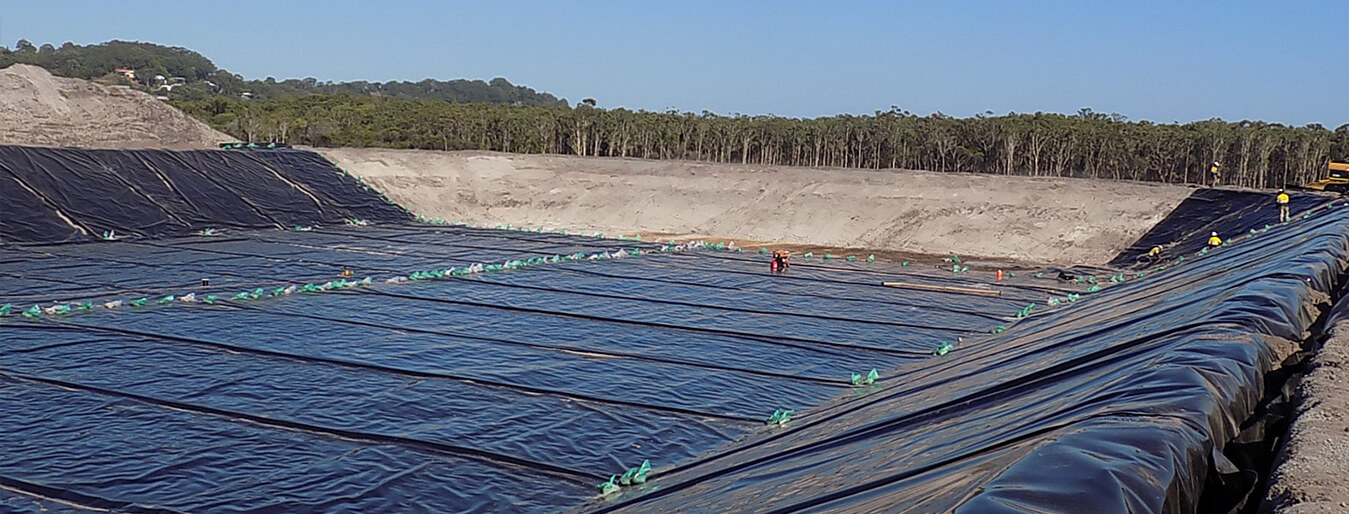
If you’ve ever dealt with a leaking pond, a seeping canal, or a containment project gone wrong, you already know how expensive the damage can get. More often than not, the liner itself wasn’t the problem — the installation was. That’s the thing about HDPE lining that most people don’t talk about enough: buying good material is only half the job. How you put it down decides whether it lasts 30 years or starts failing in 3.
This guide walks you through the entire installation process — from clearing the ground to covering the HDPE Liner — in a way that actually makes sense on-site.
Not every project needs the same liner. Using something too thin under a landfill is asking for trouble. Going unnecessarily thick on a small farm pond wastes money. Here’s a simple reference:
| Application | Thickness to Use |
| Garden or Ornamental Ponds | 0.5 mm – 0.75 mm |
| Farm Ponds and Irrigation Canals | 1.0 mm – 1.5 mm |
| Fish and Shrimp Farming | 1.0 mm – 1.5 mm |
| Industrial or Chemical Containment | 1.5 mm – 2.0 mm |
| Landfills and Mining Sites | 1.5 mm – 2.5 mm |
Safety gear: gloves, rubber-soled boots (no sharp soles on the liner, ever), protective eyewear.
A lot of installers skip this step or rush through it. Don’t. Fifteen minutes of planning on paper saves hours of wasted material and rework on-site.
Measure the full area you need to cover. Add at least 100–150 mm extra on all edges for overlaps, and another 300 mm specifically for where the liner will fold into the anchor trench around the perimeter. Draw a simple panel layout — which direction rolls will run, where seams will fall, and how many panels you’ll need.
The goal is always to keep seams to a minimum. Think about it: every seam is a joint that has to be welded and tested. The fewer you have, the cleaner and faster the job.
If your project sits under regulations — a lined landfill cell, for example — check what standards apply before you start. GRI GM13 and ASTM D7176 are the ones that usually come up.
More HDPE liners fail because of poor ground preparation than any other reason. A small rock the size of your thumb, left under the liner, will eventually punch through it under pressure or load. Roots are even worse — they keep growing.
Strip the entire area. Remove rocks, vegetation, roots, debris, anything sharp or angular. Then grade the surface so it’s smooth and compact. A slight slope of 1–2% is good — it stops water from pooling underneath the liner over time, which causes it to shift and bubble.
If your ground is naturally rocky or abrasive — which is common on mining and industrial sites — don’t put the HDPE directly on it. Lay a nonwoven geotextile cushion layer first. It acts as a buffer and stops point loads from damaging the liner from below.
Once the ground is prepared, keep vehicles off it. Even a wheel rut in the compacted surface creates a stress point under the liner.
Use a utility knife or geomembrane cutter and make sure edges are clean — rough or ragged edges don’t weld well.
Label every panel clearly. Write it on the liner itself or tag it. When you’re managing 20 or 30 panels on a large site, knowing which panel goes where saves real time and prevents the wrong panel ending up in the wrong spot.
Now the liner goes down. This part sounds straightforward but has a few things that catch people out.
Unroll each panel slowly and carefully. Don’t drag or force it — dragging tears it and introduces stretching that weakens the material. If you have a larger project, use a spreader bar and low-pressure equipment to unroll panels without putting people on top of the liner before it’s secured.
Leave some slack — around 5 to 10%. The liner will be pushed down by water weight or backfill, and if it’s stretched tight it’ll tear at the seams or anchors under that load. Slack isn’t sloppiness; it’s intentional.
Use sandbags along the edges to hold panels in place while you work. Wind is the enemy during deployment — panels can shift or billow and undo all your alignment work.
Only deploy what you can weld in one day. HDPE degrades under prolonged UV exposure, and leaving unprotected panels baking in the sun for days before welding shortens their life.
This is the most skilled part of the job. Bad welding is the number one reason liners leak, and no amount of good material or careful deployment will save you if the seams are wrong.
A few rules that matter:
Step 6: Test Every Seam Before You Cover Anything
You cannot see a bad weld by looking at it. You have to test it. This step is what separates a liner that performs for 30 years from one that starts seeping in 18 months.
Any seam that fails gets repaired — grind the area, weld a patch over it that extends at least 150 mm in every direction, and test it again. Keep going until everything passes.
All that careful installation work can be undone if the liner isn’t anchored properly at the edges. Wind can lift unsecured panels. Water pressure can push the liner inward. On slopes, gravity works against you.
Dig a trench around the perimeter of the lined area — typically 300–450 mm deep and 300 mm wide, though larger projects may need bigger trenches depending on soil and expected loads. Fold the liner edge into the trench, then backfill with compacted soil in layers. Pack it properly; loose backfill will let the liner pull out over time.
On slopes, textured HDPE liner (which has a roughened surface on one or both sides) is worth using. The texture increases friction against the soil above and below, which prevents the liner from sliding under load.
If your project has pipes, inlets, or monitoring wells passing through the liner, each one needs a prefabricated boot — a shaped HDPE fitting that gets extrusion-welded around the penetration point. Each boot gets individually pressure-tested. Penetrations are statistically the most common failure point on any liner system, so take them seriously.
Get a protection layer down as soon as the welding, testing, and anchoring are done. Don’t leave the HDPE exposed any longer than necessary.
Lay a nonwoven geotextile directly on top of the liner before any soil, gravel, or drainage material goes on. This protects the liner surface from abrasion and point loads during covering.
For landfill cells, the protection layer is followed by the leachate collection layer — typically a gravel drainage blanket with perforated collection pipes sitting on top of the liner.
For ponds, start filling with water slowly from the deepest point. The weight of the water naturally presses the liner into the contours of the excavation and takes up any remaining slack. Don’t rush the filling — give it time to settle. After 24–48 hours, trim any excess liner at the edges and complete the anchor trench backfill.
For everything else — canals, containment bunds, caps — use low-pressure vehicles to place the cover soil. No heavy machinery directly on the liner.
This matters a lot on regulated projects, but honestly, it’s a smart move no matter what kind of liner job you’re doing.Track every panel. Write down which roll you used, exactly where you put it, and the date you installed it. Log your welding parameters each day: temperature settings, speed, operator name, weather conditions. Record every seam test and its result. Note every repair — what failed, where, what was done, and whether it passed on retest. Keep the material certifications from the manufacturer.
If the project ever needs an inspection or if a problem develops years down the line, this documentation tells you exactly what happened and when. It protects you and it protects the client.
Most liner problems trace back to the same handful of errors. Worth knowing them so you don’t repeat them:
For a small single-panel pond — yes, if you’re careful and the liner doesn’t need welding. As soon as you’re joining panels or working on anything commercial, industrial, or regulated, you need a certified installer. The welding equipment alone requires skill to operate correctly, and improper seams aren’t something you discover until there’s already a problem.
A well-installed HDPE liner, with proper protection above and below, will realistically last 30 to 50 years. The main things that shorten lifespan are UV exposure from not covering it, physical damage from improper covering, and chemical exposure outside the liner’s rated range.
Clean the damaged area, grind the surface lightly around the puncture, and extrusion-weld an HDPE patch over it. The patch should extend at least 150 mm beyond the damaged area on all sides. Test the patch with a vacuum box before covering.
Yes. HDPE handles a wide temperature range and is one of the most climate-adaptable liner materials available. In very cold conditions, the liner becomes slightly stiffer, so handling needs to be more careful during deployment. In extreme heat, welding parameters need adjustment to account for the surface temperature of the material.
Smooth HDPE is used on flat and gently sloping applications. Textured HDPE — which has a rough surface on one or both sides — is used on slopes where you need friction between the liner and the soil layers above or below it. Slopes steeper than about 3:1 generally need textured liner to stay stable.
The Bottom Line
Most people think HDPE liner problems come from bad material. In our experience at GDT Lining, that’s rarely true. The material almost never fails — the installation does. A rock left in the ground, a seam welded in the wrong conditions, a pressure test skipped because the day ran long. That’s what causes a perfectly good liner to leak.
The good news is that none of this is hard to get right when you know what you’re doing. Clear the ground properly, weld with the right equipment and the right conditions, test every seam before it gets covered — and that liner will still be doing its job when most other site infrastructure has been replaced twice over.
That’s the standard GDT Lining holds itself to on every project we take on. Not because the paperwork demands it, but because we’ve seen what happens when someone cuts corners on a containment job — and it’s never a small problem.
If you’re planning an HDPE lining project and want it done in a way you won’t be revisiting in two years, talk to us. GDT Lining works across ponds, canals, landfills, and industrial containment — and we’d rather answer your questions at the planning stage than help you fix something that went wrong during installation.
Copy Right 2018
Powered By : Onqanet technologies