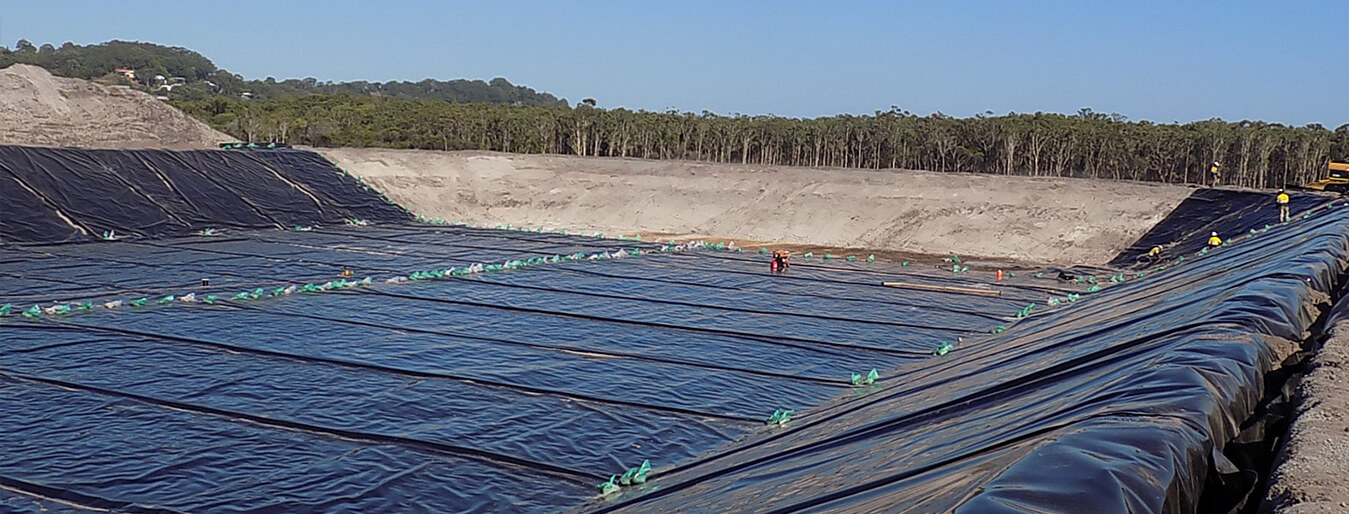
When you’re investing in a containment system, one of the first questions that usually comes up is, “How long is it going to last?” After all, whether the liner is being used for water storage, mining operations, wastewater management, or environmental protection, durability plays an important role in determining the overall value of the project.
That is probably one of the reasons why HDPE Liners is a popular choice. Their resistance to extreme conditions is one of the major contributing factors that enables their wide applicability across various fields of operation. Nonetheless, the life span of each liner varies based on a number of elements that may affect their efficacy over time. These include the quality of materials used, the quality of installation process, environmental conditions in which they are used, and regularity of maintenance. This knowledge will enable project managers to make the best decisions to ensure maximum performance of their containment system over time.
Before we consider the question of durability of a liner, it is necessary to figure out why the material itself is so popular nowadays.
Synthetic or High-Density Polyethylene is a sturdy material often used for making liners which help ensure that there is no leakage from a project site to its surroundings.
These liners can be found in different fields ranging from mining sites, landfills, wastewater facilities, chemical storage sites, irrigation basins, and even water reservoirs. As their name suggests, their primary function is to act as a lining or liner to make sure that everything inside stays within its boundary.
Liners that are made with the help of this material have the ability to deal with challenging environments without any hassle.
Durability over time is one of the major reasons that lead individuals to choose these liners.
Synthetic Liners are designed in a manner that allows them to resist the effects of all those factors that can deteriorate other liners. Chemical resistance, sunlight resistance, and general damage resistance are a few more benefits offered by protective containment liners.
Overall, it seems like synthetic Liners are excellent options to opt for due to their durability.
This question does not have one correct answer as there are many variables involved in each case. There are various considerations regarding the length of time that a liner will last.
Synthetic liners will, when correctly installed and well-maintained, serve reliably for many years, even decades.
Water storage ponds or reservoirs that choose to use protective containment liners, can withstand outdoor environments for a long time while maintaining their operational performance.
This may also apply to mining projects, landfills, and wastewater treatment plants where liners are needed to last through harsh conditions.
Even though every project is unique in its own way, HDPE liners have been used due to the desire for performance.
A polyethylene liner lifespan is not solely dependent on any single factor. It depends on various aspects that determines how long it will function in the long-run. These factors are:
The quality of the liner itself, the installation process of the liner, the weathering process undergone by the liner, and the nature of the substance being stored all play a role here. The quality of the liner becomes irrelevant if it was poorly installed and maintained.
One of the biggest factors that affect the durability is the quality of the liner itself.
However, not all liner types are equal. Some items are produced from higher-quality materials under strict quality control processes compared to other items.
Using a superior liner will go a long way in the years to come. This is because high-quality materials tend to be more dependable and perform much better even in harsh conditions.
The liner’s thickness can also influence its performance under various conditions.
Where the risk of damaging the liner is minimal and conditions of operation are less harsh, thin liners may be considered.
In case of mining sites, industries, or waste disposal sites, it may be more preferable to have a thicker liner as a result of its extra puncture-resistant characteristics.
Most HDPE liners have unique additives to increase their longevity.
Such additives include UV inhibitors which increase the resistance of the liner to light, as well as have antioxidants that delay the degradation process. One popular example of an additive is carbon black, which increases the environmental resistance of the liner.
Environmental conditions in which the liner will be placed may also significantly affect the lifespan of that liner.
Some containment liners are exposed to outdoor elements such as sun rays almost all the time.
Polyethylene Liners are favored by many because of their superior resistance to UV exposure. Still, exposure to UV rays over time may affect liner performance, so it is critical to choose the appropriate liner specification.
Weather extremes such as heat and cold, as well as constant weather changes, can place stress on materials.
Although Polyethylene Liners are good for use in varied weather, extremely hot or cold temperatures can also be a contributing factor towards the liner’s performance.
The items that are being stored or contained play a significant role in determining how long the liners will last.
Depending on what you have in the storage tank, liners should possess different properties. This is the reason why it is important to select the right liner. With the right liner, its life span can be extended.
No matter how good the liners may be, they will never serve their purpose if not properly installed. The proper installation of a liner is a key factor in its success.
An efficiently laid liner will be better able to ensure its longevity.
Problems such as the welding of seams, laying proper groundworks, and the installation itself can greatly reduce any future problems. Considering all these factors initially means that the liner will be well-equipped for future years.
Some of these liner problems may arise from installation errors.
Irregularities in the ground surface, weak welds, and inadvertent puncturing of the liners are just some of the most common problems associated with the installation of liners. These seemingly trivial problems may actually cause serious complications to occur in the future.
It takes both the know-how and experience of professional liners installers to successfully install liners.
Professional installers follow industrial standards and will provide effective liner installations that will increase the lifespan of the liners installed.
Like many other assets, Polyethylene Liners also benefit from regular maintenance and monitoring.
The more often inspections are made, the more likely minor problems will be detected ahead of time.
In addition, the periodic check-up of the liner will help detect any wear or damage, enabling timely repairs and avoiding contamination.
A lot of factors can damage the liner.
By following some simple guidelines, the likelihood of damaging the liner can be avoided or greatly reduced.
Small tears, holes, and seam issues are usually much easier and more cost-effective to repair if found early.
By doing so, one will ensure that the effectiveness of the containment system is not affected and that small problems do not become bigger ones.
Although very durable, liners will eventually show signs of wear and tear. It is imperative that one is able to notice the signs before anything else takes place.
The presence of racks, tears, holes, and areas of wear should never be overlooked.
This may suggest that you need to patch up or examine your liner further.
Unexpected water level decreases, wet spots near the containment facility, or water leakages may mean that your liner is not doing what it should.
In such cases, you need to act immediately.
The importance of inspections increases with age.
This is because, irrespective of whether there are signs of any defects, it is necessary to monitor aging materials for proper performance.
There are many project owners who like to compare different liner materials before arriving at a decision.
Both materials are used for containment purposes, HDPE is generally known for their strength, durability, and their supreme ability to handle challenging conditions for longer periods.
Remember that every liner has their own set of strengths and limitations.
However, the best choice depends on the project, but HDPE remains to be one of the most widely used options because of its balance of durability, reliability and longer service life.
Various projects have different needs.
Choosing a liner that matches the conditions, materials being held, and expected lifespan of the project can make a significant difference for ensuring its long-term performance.
Proper installation is one of the most important factors that helps in achieving the maximum lifespan.
In this regard you need to work with experienced installers so that they can help in reducing the possible risks and can also ensure long-term success.
Inspections on a routine basis and proactive maintenance helps the liner remain in good condition.
This is why preventive maintenance is necessary to prevent the small issues from turning into costly repairs.
Keeping a check on how the liner is performing over time can provide a sense of valuable information.
If you notice a change in the operating conditions, or the liner being exposed to the environment, or if you notice a change in the containment performance, then it is likely that repairs are immediately needed.
From mines to wastewater treatment facilities, it has proven its reliability through various sectors.
The reliability of Synthetic liners even when under challenging conditions is another reason why these liners are commonly used.
The presence of reliable liners will protect us against any potential leakages and contamination issues.
It will protect our environment from any kind of potential damage.
By using durable liners, we can be sure that we will not require replacements frequently.
We will thus save on costs involved in our projects in the long run.
It cannot be answered easily since each project is unique. There are a lot of factors that may influence the life expectancy of HDPE liners, such as the material itself, installation, environmental factors, and maintenance among others. Once all these factors are well considered, then the HDPE liners will work well.
Synthetic liners are able to withstand environmental exposure and are resistant to UV light. This is why HDPE liners are suitable for use in ponds, reservoirs, mines, and other outdoor applications. Environmental exposure can always affect the performance of materials in the long run, but this applies even to synthetic liners.
Most likely, it can. Minor damage caused by small tears or punctures in the seam area may often be mended to prevent the problem from getting worse.
One cannot say definitely which factors have the greatest role to play in determining the longevity of a liner because there are so many factors affecting the lifespan of a liner. The quality of the liner, its proper installation, environment, and maintenance are the most important among them.
A number of factors determine how long a synthetic liner will last. Among those factors include the quality of the synthetic liner, its installation method, its operating conditions, and regular maintenance and inspection.
Luckily, there is good news about the longevity of synthetic liners. Provided that you select the appropriate synthetic liner and handle it properly, it can serve the purpose for decades Besides, choosing the right product and properly working with it at the beginning would save you trouble in the future.
For those who plan to utilize liners in their water storage system, mining application, environmental containment, or industrial applications, HDPE Liners is always the best choice. Besides, choosing a reputable manufacturer such as GDT Lining could simplify things for you.
Copy Right 2018
Powered By : Onqanet technologies