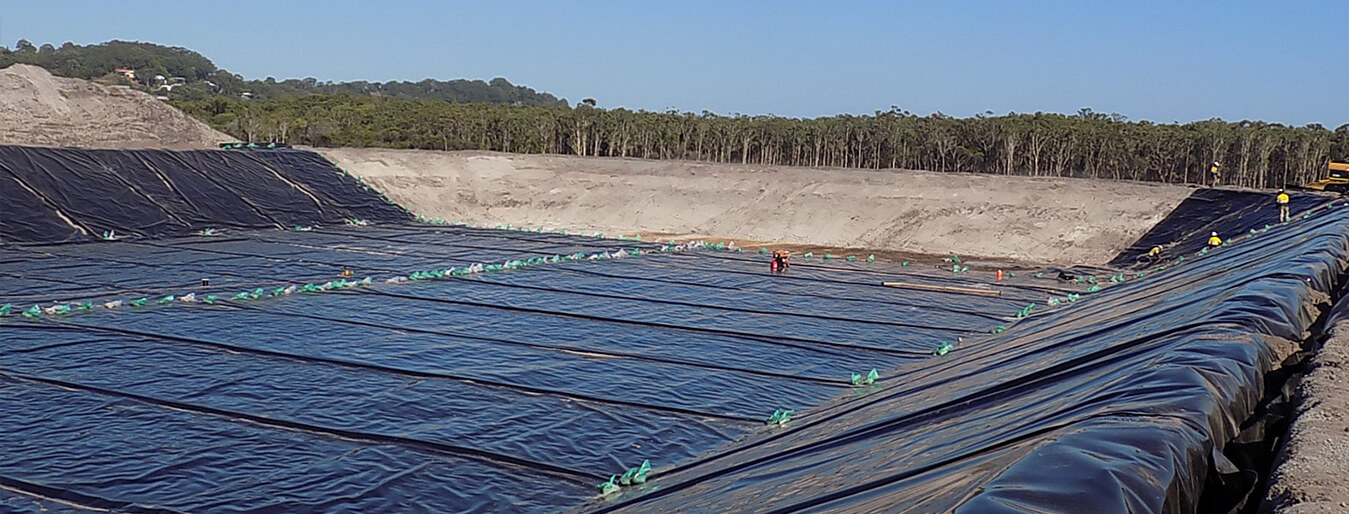
Pick the wrong dam liner and you could be replacing it in five years — or dealing with leaks that cost far more than the liner itself. That is a situation most projects cannot afford.
HDPE and PVC dam liners are the two most widely used options on the market. They look similar on the surface but differ significantly in durability, installation, cost, and safety. This guide breaks down exactly what sets them apart so you can make the right call for your project.
A dam liner is not something you want to revisit every few years. Whether you are storing water for a farm, managing runoff on a mine site, or lining a fish pond, the liner is what keeps everything contained. Get it right and it works quietly for decades. Get it wrong and you are dealing with leaks, contamination, or a full replacement far sooner than planned.
The material you choose directly affects how long it lasts, how safe the water is, and how much the whole project costs over time.
Both are synthetic liners used to seal dams, ponds, and reservoirs against water loss. Beyond that, they are quite different materials.
HDPE is a hard and strong material. It does not bend or break easily, which is exactly what you want when it is sitting under water for years. You can get it in different thicknesses — anywhere from 0.5mm to 2mm — depending on how heavy duty your project is. The good thing about HDPE is that it does not get damaged by chemicals or any exposure to sunlight. It just keeps doing its job. Another big plus is that it does not mix anything into the water, so it is completely safe if you are storing drinking water or raising fish. And it lasts a long time — we are talking 20 to 50 years if it is looked after properly.
PVC is the lighter, more flexible option of the two. It is much easier to carry around on site and you can shape it around awkward edges or odd-shaped dams without a lot of hassle. As compared to HDPE it costs less that makes it a decent option if you are working with a tighter budget. In decent conditions it can last anywhere from 10 to 20 years, though that number drops if it is constantly exposed to harsh weather or strong sunlight. One thing worth knowing is that PVC has certain additives in it that can slowly seep into the water over time. That is why it is not a good idea to use it if you are storing drinking water or running a fish farm — for those situations you really need something safer.
How HDPE and PVC Dam Liners Are Different
If your site gets a lot of sun, deals with chemicals, or goes through extreme hot and cold weather, HDPE is going to hold up much better. It can last two to three times longer than PVC in those kinds of conditions. For something like a mining site or a large farm reservoir, that difference is huge — you do not want to be pulling up a liner and replacing it every few years.
HDPE needs to be welded by a professional to make sure the seams are properly sealed. It is not something you can do yourself with basic tools. PVC is a lot more straightforward. It is light, it bends easily, and you can cut it and fit it on site without needing to bring in specialist contractors. For smaller projects that is a big advantage.
PVC is cheaper to buy and cheaper to install — there is no getting around that. But HDPE lasts so much longer that over the full life of a project it often works out to be the better deal. If you are putting in a permanent structure that needs to last decades, paying more upfront for HDPE usually saves you money in the long run. PVC makes more sense when the project is smaller or you know it is not going to be a permanent setup.
If you are working on something big or serious — a mining site, a large farm reservoir, a drinking water tank, or a commercial fish farm — HDPE is really the only material that makes sense. These are situations where the water quality matters, the conditions are tough, and you cannot afford for the liner to fail. HDPE handles all of that without any issues.
PVC is better suited to smaller, lower-pressure projects. Think garden ponds, decorative water features, small irrigation dams, or anything that is temporary. If the project is not going to face harsh conditions and you are watching your budget, PVC does the job well enough without spending more than you need to.
Frequently Asked Questions
Look, both materials work. It really just depends on what you are trying to do. If you are building something permanent, storing drinking water, or working in tough conditions, HDPE is the one to go with. If it is a smaller project and budget is the main concern, PVC works perfectly well. The mistake most people make is choosing based on price alone without thinking about how long they need it to last or what the water is actually being used for.
Before you buy anything, it is worth having a proper conversation with someone who knows their stuff. GDT Lining has been helping people find the right HDPE vs PVC dam liners for all kinds of projects — big and small. Get in touch with them before you commit and you will save yourself a lot of time, money, and headaches down the line.
Copy Right 2018
Powered By : Onqanet technologies