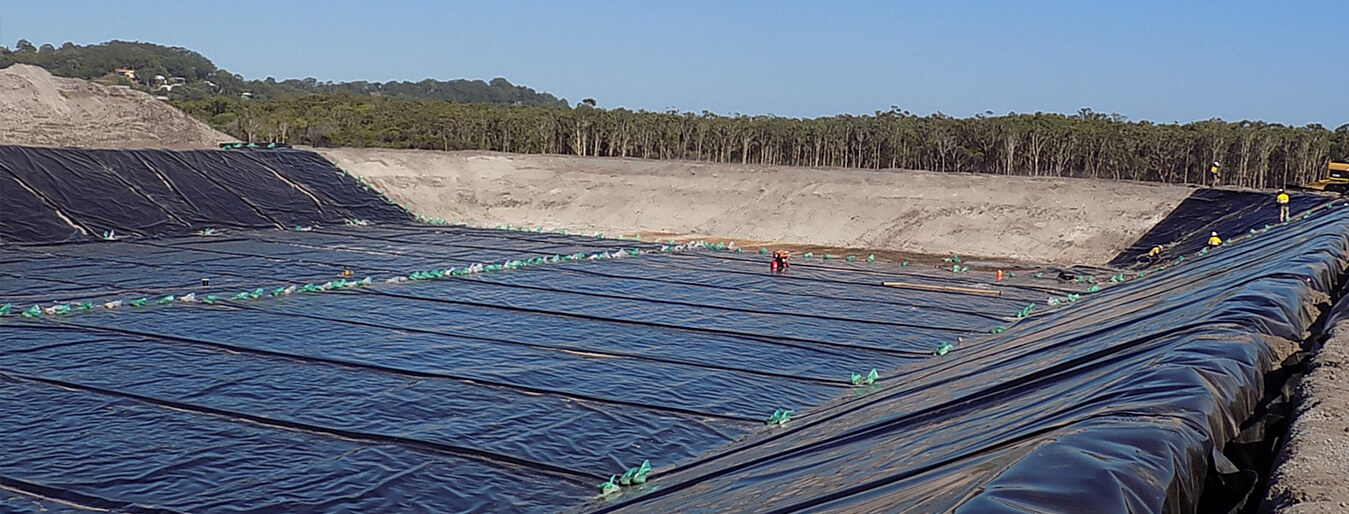
In mining, what stays beneath the surface can matter just as much as what comes out of it.
Whenever we speak about mining operations, it relates to generating tailings, and managing this waste safely needs more than finding space to store it. Tailings dam liners can contain residual processing chemicals, fine materials, and water that may create seepage risks if the storage facility is not properly designed. So when the liquid migrates beyond the contaminant area, it often threatens the surrounding soil and creates broader environmental challenges. In this case, tailings dam liners become an important part of the solution.
When you take Tailings dam liners under consideration, you get to focus on engineering lining systems, including appropriately specified HDPE geomembranes. However, reliable protection depends on more than laying down a liner. Now, the crucial fact is to understand the factors which are designed for Tailings dam liners.
In this guide
What you will learn about mining containment
How liners help control mining risks
The four stages, from tailings storage to environmental protection
The measures that help operators manage containment risk
Steps for building a more reliable tailings containment system

Tailings dam liners form a low-permeability barrier that helps reduce seepage from mining waste storage.
Tailings dam liners help control mining risk while keeping a low-permeability barrier that reduces seepage and helps protect surrounding soil and groundwater.
According to the Victorian government’s guidelines, seepage controls may include liners, under drains and seepage collection systems. These are responsible for keeping the work together to manage liquid movement and reduce the risk of contaminants reaching surrounding soil and groundwater. But the tailings dam liners are only as effective as the system supporting them. Material selection and ground prep are what influence the lining system demanded by the mining condition. Below are the four stages worth following:
Tailings Storage
HDPE Geomembrane Barrier
Seepage Collection and Monitoring
Environmental Protection
Based on the above four stages, they play a distinct role in making a mining containment system, making each stage dependent on the others. The process starts with safely storing tailings in a facility. Drainage and monitoring systems help collect and track seepage, while regular inspections support ongoing environmental protection. These measures help operators manage containment risk more effectively, such as:
Choose an HDPE liner based on tailings chemistry and engineering requirements.
Preparing the subgrade to reduce the risk of punctures and liner damage.
Use appropriate seam welding, testing and layers to support lining system integrity.
Inspecting the facility and monitoring seepage to identify potential problems while guiding maintenance.
Ultimately, effective mining containment requires more than installing a liner. It is important to combine a suitable geomembrane with engineered drainage, seepage management and regular monitoring, creating a more dependable system for managing environmental risks.
Fun Fact
A tailings storage facility can contain millions of tonnes of mining waste, and even tiny amounts of seepage can matter when contaminants accumulate in surrounding groundwater over time.
Reliable mining containment is based on starting long before a liner is installed. It often needs a system that is designed around the site’s geology, tailings characteristics and long-term environmental risks. For example, as reported by Australia’s Productivity Commission, 620 million tonnes of waste in 2020-21 and an estimated 96% of that waste were deposited in tailings dams. This data shows why choosing the right containment approach matters, but effective performance depends on engineering design, installation quality and ongoing monitoring. Now here are a few steps that can be used:
Choose the right liner to assess tailings chemistry, foundation condition and expected loads.
Prioritise installation quality, like subgrade preparation, to help reduce the risk of liner effects.
Build in seepage monitoring for underdrains, collection system and groundwater monitoring while managing seepage problems.
Ultimately, dependable containment is achieved by combining suitable tailings dam liners with sound engineering, quality installations and ongoing monitoring. So the right system should be designed around the needs of the site rather than relying on the liner alone.
Mining containment needs more than just a place to store the waste. It demands a system that is designed to manage seepage, protect surrounding resources and support long-term environmental responsibility. Now, tailings dam liners play an important role by helping contain liquid movement when designed using suitable engineering. Now, before your next mining project moves forward, consider whether the liner strategy addresses the site’s specific conditions and long-term risks.
Ready to find your project’s containment requirements?
Copy Right 2018
Powered By : Onqanet technologies